
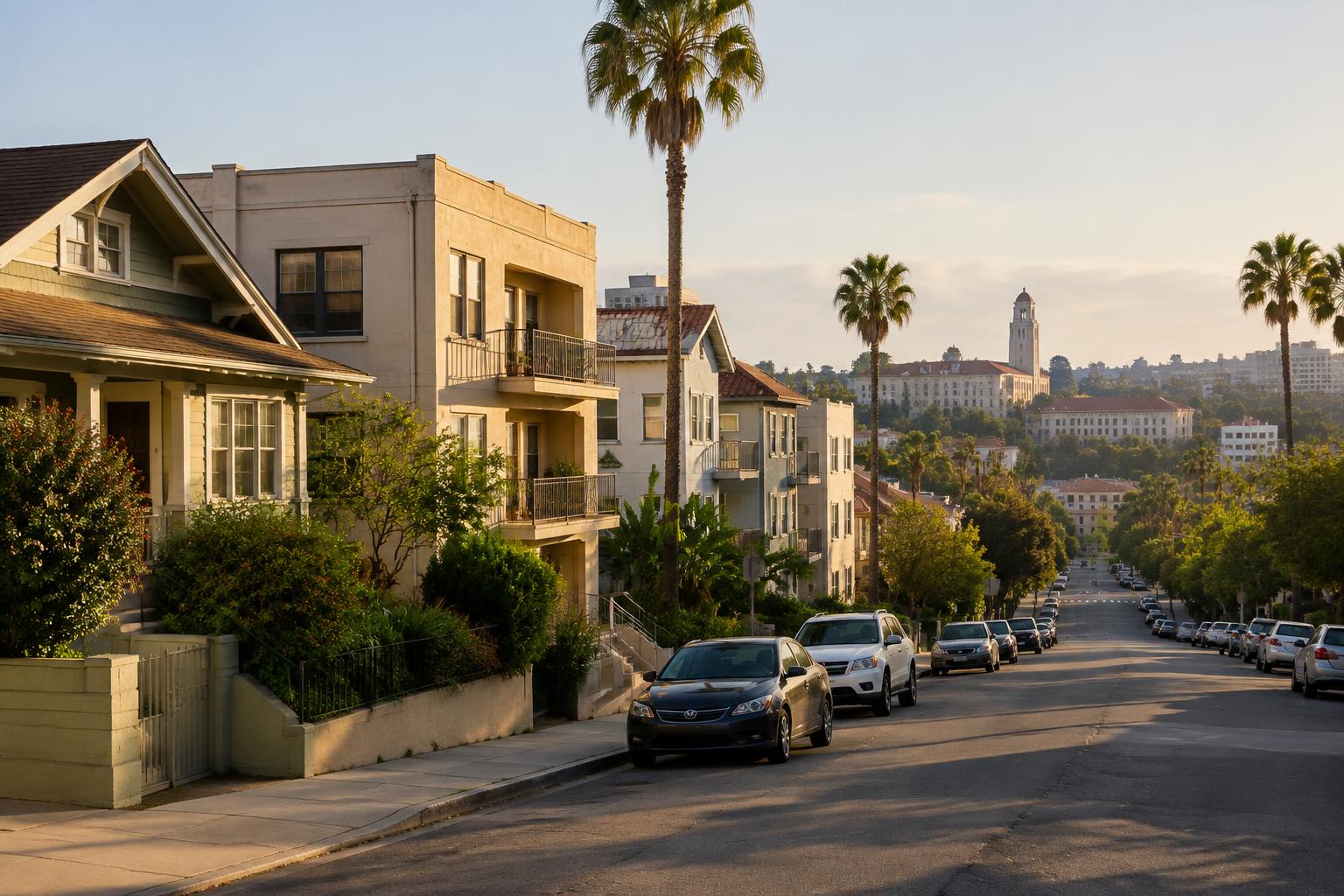
Micro-areas and location differences
SDSU and College West. The streets closest to campus and the SDSU Trolley station have the clearest university connection. They may suit students, university staff, transit riders, and some investors. Check parking, noise, foot traffic, event traffic, rental concentration, and leasing rules.
College East and established residential streets. Away from the busiest campus corridors you'll find established single-family streets with varied home styles and lot conditions. Slope, landscaping, traffic, nearby rentals, and service access change street by street.
Montezuma Road corridor. A key connector between campus, homes, and businesses, and a focus of long-term planning for mobility and development. Check traffic, crossings, noise, parcel zoning, and nearby proposals.
El Cajon Boulevard corridor. A historic commercial corridor with a mix of businesses and car-oriented development. It's handy for services, but parking lots, driveways, and traffic make the walking experience uneven.
Alvarado Road and the transit and medical area. The Trolley station and nearby medical uses are another important access point. Convenience can come with traffic, road noise, slope, and a longer walk to the platform than the map suggests.
Edges near Rolando, El Cerrito, and La Mesa. Listings often use neighborhood names loosely. Confirm the City planning-area boundary and the exact location rather than assuming a nearby community is part of College Area.
Housing types you may see
- Established single-family homes: a wide range of ages, layouts, lot sizes, and maintenance histories. Inspect roofs, plumbing, electrical, drainage, foundations, windows, sewer laterals, and past additions.
- Student-oriented rental homes: room layout and campus access can attract investors, but verify legal occupancy, parking, lease structure, local rules, insurance, and operating costs.
- Apartments and multifamily buildings: review rent rolls, expenses, deferred maintenance, permits, tenant protections, and financing with the right professionals.
- Condos and townhomes: review HOA reserves, meeting minutes, master insurance, special assessments, rental restrictions, parking rights, and maintenance responsibilities.
- Homes with expansion potential: a large lot or older structure does not guarantee an ADU, addition, lot split, or redevelopment. Confirm zoning, overlays, setbacks, access, utilities, and permits.
How to read local market data
- Separate detached homes from condos, townhomes, and multifamily properties.
- Separate owner-occupant sales from properties priced on rental income or redevelopment potential.
- Use recent closed sales plus active and pending competition, and note the time period and sample size.
- Be careful with monthly medians when sales counts are small or the mix of homes changes.
- For investments, run rent, vacancy, repairs, insurance, taxes, utilities, management, and capital items, not gross rent alone.
The 2025 community plan update
The City of San Diego adopted an updated College Area Community Plan in December 2025. It sets a long-term framework for housing, jobs, mixed-use corridors, mobility, and public spaces, and City materials describe capacity for roughly 17,750 additional homes. That is planning capacity, not a promise that those homes will be built or a prediction of timing.
- Change will likely be gradual and concentrated along selected corridors.
- Actual projects depend on owners, approvals, infrastructure, financing, and the market.
- For a specific purchase, check parcel zoning, plan designations, nearby projects, and permit applications.
- Weigh both sides: new investment and services may arrive, while construction, density, traffic, or view changes may affect some locations.
For parcel-specific development questions, check the City's College Area Community Plan documents or talk with a City permit planner.
Rental and investment considerations
Being near SDSU does not automatically make a property a sound investment. Price, legal use, layout, financing, and operating costs matter as much as distance to campus.
- Model realistic rent and vacancy for the exact unit; don't assume every bedroom can be rented separately.
- Confirm occupancy limits, permits, parking requirements, local rental rules, tenant protections, and HOA restrictions.
- Budget for turnover, repairs, utilities, landscaping, management, insurance, taxes, and major capital items.
- Plan around academic-year lease timing, and think about how new supply or shifts in student demand could affect you.
This guide is not an investment recommendation. Get current legal, tax, insurance, and property-management advice for your situation.
Key tradeoffs
| Potential advantage | Tradeoff to evaluate |
|---|---|
| SDSU proximity | Campus activity, events, and traffic vary by location and calendar. |
| Trolley access | Convenience depends on the route, schedule, hills, and where you're going. |
| Established housing | Older systems, deferred maintenance, and permit history need a close look. |
| Rental demand | Income isn't guaranteed; expenses, vacancy, legal use, and turnover decide results. |
| Commercial corridors | Services can come with traffic, noise, and parking lots. |
| Long-term plan capacity | Possible reinvestment, but timing and neighborhood effects are uncertain. |
| Central location | Good regional access, with congestion on key roads at peak times. |
Buyer due-diligence checklist
- Visit on a weekday, an evening, a weekend, and if you can, during an SDSU event or busy campus week.
- Check parking availability and restrictions, curbs, driveway access, and any permit requirements.
- Walk to the Trolley, campus, shops, and parks instead of trusting straight-line distance.
- Verify school district and attendance assignments for the exact address.
- Inspect roof, foundation, drainage, plumbing, electrical, sewer lateral, windows, HVAC, and signs of unpermitted work.
- Review permit history for additions, garage conversions, ADUs, and added bedrooms.
- Check current zoning, plan designations, overlays, setbacks, and nearby project applications.
- For rentals, confirm permitted use, occupancy, lease rules, tenant protections, parking, insurance, and realistic expenses.
- For condos and townhomes, review HOA reserves, insurance, minutes, assessments, rental rules, and parking rights.
- Compare similar properties by type, condition, street, campus distance, transit access, and parking.
A simple fit test
- Do we want the university and transit connection, or does the area just look central?
- Have we checked the exact block for parking, traffic, noise, student rentals, and event days?
- Does this home fit our needs today, without counting on future redevelopment?
- Have we verified zoning, permits, school assignment, and any rental assumptions?
- If investing, does the deal still work after vacancy, repairs, insurance, taxes, management, and financing?
- Have we compared it with Talmadge, Normal Heights, Mission Valley, Rolando, and La Mesa using the same criteria?