
Central San Diego
Living in Clairemont: Which of the 4 Areas Feels Like You?
One of San Diego's original master-planned communities: mid-century ranch homes, a canyon system woven through every neighborhood, and a central location that reaches almost everywhere in fifteen to twenty minutes.
The Vibe
Ask longtime San Diegans where they'd buy if they wanted to be fifteen to twenty minutes from almost everything, and Clairemont is almost always part of the conversation. Unlike many coastal neighborhoods, Clairemont isn't defined by one attraction. Its appeal comes from convenience, established neighborhoods, and a genuinely wide variety of housing. Residents reach La Jolla, Pacific Beach, Mission Bay, Downtown, UTC, the Convoy District's dining scene, and Mission Valley in minutes, all from four distinct residential areas: Bay Ho, Clairemont Mesa West, Clairemont Mesa East, and North Clairemont.
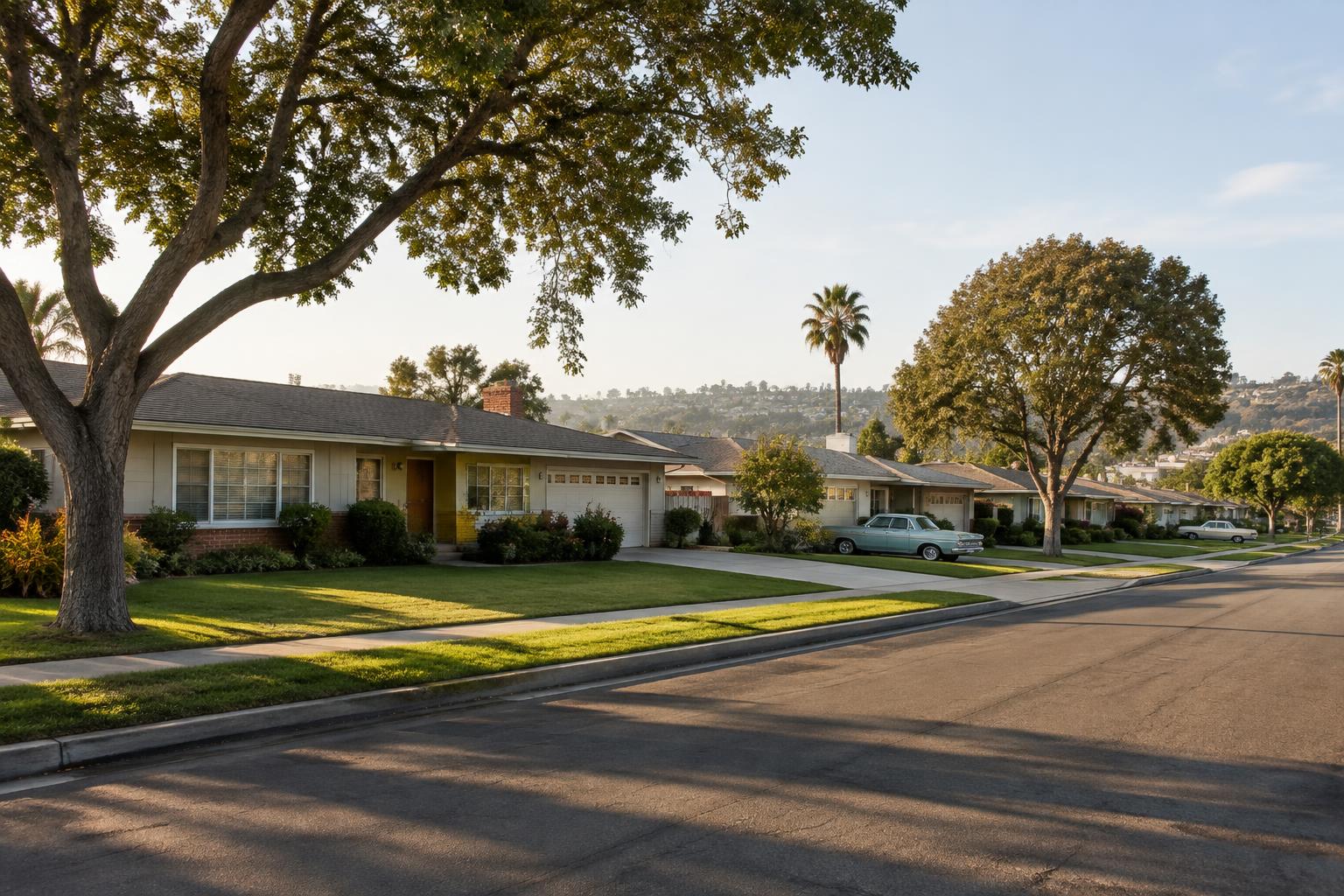
Clairemont began in 1950 as a development by locals Lou Burgener and Carlos Tavares on what was then called Morena Mesa, named Clairemont after Tavares' wife, Claire. Rather than impose a traditional street grid, the developers hired engineers to lay out gently winding, curvilinear streets that took advantage of the area's deep canyons and view lots overlooking Mission Bay, investing $125,000 in sewers, water, and access roads before building a single home. Between 1952 and 1954, crews built seven homes a day, making it one of the largest post-war planned communities in the nation, with schools, parks, shopping centers, and churches integrated into the design from the start rather than added later.
Unlike North Park or Pacific Beach, Clairemont doesn't revolve around one downtown neighborhood. Instead, it's anchored by a decentralized collection of neighborhood shopping centers and commercial corridors: Clairemont Drive, Balboa Avenue, Genesee Avenue, Clairemont Town Square, and the nearby Convoy District, San Diego's officially designated pan-Asian cultural and business district, for dining. This layout gives residents easy access to daily necessities while preserving the quiet residential character that defines much of the community.
Clairemont is defined by its canyon systems as much as its residential streets. Tecolote Canyon Natural Park, Marian Bear Memorial Park, and Rose Canyon Open Space together form roughly 1,500 acres of connected open space locals call the Tri-Canyons, with Tecolote alone offering about 6.5 miles of trails and Marian Bear another three-plus miles of mostly flat canyon-floor paths. Many residents describe Clairemont as old-school San Diego: established, diverse, and community-oriented rather than trendy.
Live here if…
- A fast, central commute matters more than a walkable downtown: Clairemont sits about 10 miles from downtown San Diego (roughly 20 minutes in normal traffic), with easy access to the 5, 805, 163, and 52 freeways
- You want more home and more lot for the price than nearby coastal communities offer: Clairemont's mid-century footprint means larger lots and more interior square footage than many urban San Diego neighborhoods
- Mid-century ranch architecture and ADU potential appeal to you: original 1950s and 1960s ranch homes make up much of the community's housing stock, many with room to expand or add an ADU
- Canyon trails and outdoor space are part of your daily life: Tecolote Canyon, Marian Bear Memorial Park, and Rose Canyon Open Space give residents roughly 1,500 combined acres of hiking, biking, and dog-walking terrain
- You want a family-oriented, established community: Bay Ho ranks 22nd and North Clairemont ranks 39th in school quality, and neighborhood parks and recreation centers are woven throughout.
- You're comfortable with a community that varies meaningfully block to block rather than one uniform identity: Bay Ho, Clairemont Mesa West, Clairemont Mesa East, and North Clairemont each have a genuinely different character and price tier
Maybe not if…
- You want a walkable, restaurant-lined downtown at your doorstep: Clairemont's commercial corridors are decentralized strip centers rather than one walkable core, and Walk Scores across its four areas run from the 30s to the high 50s
- You need one consistent neighborhood identity: housing character, price, and school quality vary significantly between Bay Ho, Clairemont Mesa West, Clairemont Mesa East, and North Clairemont
- New construction is a priority: Clairemont was built out largely between the 1950s and 1960s, and most activity today is renovation or ADU addition rather than ground-up new building
- Top-ranked schools across the board are the deciding factor: only Bay Ho and North Clairemont currently rank high in school quality; Clairemont Mesa West and Clairemont Mesa East do not.
- Direct beach or bay frontage within the neighborhood itself is non-negotiable: Clairemont's four areas sit several minutes' drive from the coast, and neighboring Bay Park (which does have direct bay frontage) is covered in its own separate guide
Neighborhood DNA
How Clairemont scores across the lifestyle factors that actually shape day-to-day life.
Neighborhood parks, schools, and recreation centers were integrated into Clairemont's original master plan, and three of its four areas (Bay Ho, Clairemont Mesa West, North Clairemont) are explicitly family-oriented, with Bay Ho and North Clairemont both ranking on the school list.
Bay Ho (rank 22, grade A-) and North Clairemont (rank 39, grade B+) both appear on the San Diego school-quality ranking, while Clairemont Mesa West and Clairemont Mesa East do not, showing a mixed profile by area rather than one community-wide score.
Walk Scores range from 39 to 59 across the four areas, all in the car-dependent-to-somewhat-walkable range; no area approaches a true walk-everywhere profile.
No destination restaurant row within Clairemont's four areas itself, but direct proximity to the Convoy District's nationally recognized pan-Asian dining scene from Clairemont Mesa East, plus neighborhood spots like Bay Hill Tavern along Clairemont Drive.
Clairemont Coffee has served the community since 2013 with a loyal following, alongside chain options like The Coffee Bean & Tea Leaf on Clairemont Mesa Boulevard.
Tecolote Canyon Natural Park, Marian Bear Memorial Park, and Rose Canyon Open Space together form roughly 1,500 acres of connected trails, described locally as the Tri-Canyons, directly bordering multiple Clairemont neighborhoods.
No meaningful bar, brewery, or late-night scene identified within Clairemont's four areas; residents drive to Convoy, Pacific Beach, or downtown for nightlife.
Described by residents as old-school San Diego, with an active Clairemont Town Council, a 45-year-old community pool supported by a dedicated Booster Club, and neighborhood recreation centers hosting regular community programming.
Bay Ho's view properties represent Clairemont's clearest upper tier, but nothing approaching a premier luxury market; median prices across all four areas remain well below La Jolla, Point Loma, or Bay Park.
Larger lots and more interior square footage than many urban San Diego neighborhoods at prices meaningfully below nearby coastal communities, the community's most consistently cited strength across sources.
Long-term appreciation and central-convenience demand are real, cited strengths, but all four areas showed year-over-year price declines of 4.5%-11.1% at last count, reflecting a broader 2026 market cooling rather than a uniquely weak Clairemont trend.
Central commute and freeway access make Clairemont workable for young professionals, particularly in Bay Ho and Clairemont Mesa East, though it is not defined by this demographic the way a walkable urban core would be.
Abundant single-story mid-century ranch stock is age-friendly.
The Tri-Canyons trail network (Tecolote Canyon, Marian Bear Memorial Park, Rose Canyon Open Space) gives Clairemont genuine, extensive dog-walking terrain directly bordering residential streets.
Tecolote Canyon Natural Park, Marian Bear Memorial Park, Rose Canyon Open Space, Mount Etna Park, and multiple neighborhood recreation centers (North Clairemont, South Clairemont) give Clairemont an extensive, well-distributed park system.
Clairemont Town Square (54 stores) and Genesee Plaza anchor practical, convenience-oriented retail rather than a destination shopping district.
About 10 miles and roughly 20 minutes to downtown in normal traffic, with direct access to the 5, 805, 163, and 52 freeways; one of the most centrally connected communities.
Clairemont's four areas have no direct beach or bay frontage of their own; the nearest beach is roughly a fifteen to twenty minute drive.
As one of the nation's first post-war master-planned communities (developed 1950-1954 by Lou Burgener and Carlos Tavares), Clairemont has a genuine, documented historic identity, though without a formally protected historic district in the style of North Park's Burlingame.
Built out largely between the 1950s and 1960s; current activity is dominated by renovations, expansions, and ADU additions rather than ground-up new construction.
A consistent mid-century ranch-home identity across all four areas, with curvilinear streets and view lots reflecting the original 1950s master plan.
The specific combination of being one of the nation's largest post-war master-planned communities, a decentralized commercial layout, and roughly 1,500 acres of connected canyon trails woven directly through residential streets isn't replicated elsewhere.
Larger lots than urban-core neighborhoods, especially in Bay Ho and North Clairemont, though standard suburban setbacks and visibility overall rather than a defined privacy tier.
The Market
Price range
Trend
Diverges by area rather than by month: Clairemont Mesa East is lowest at $933K-$975K, Clairemont Mesa West and North Clairemont cluster around $1.04M, and Bay Ho is highest at $1,172,500-$1.2M. All four areas showed year-over-year declines of 4.5%-11.1% at last count.
Luxury segment
- • Bay Ho view homes overlooking Mission Bay and surrounding canyons
HOAs & lots
Uncommon among Clairemont's original single-family ranch-home stock; more common in Clairemont Mesa East's condo and townhome product.
Home Styles
Classic 1950s and 1960s ranch homes and mid-century architecture form the backbone of Clairemont's housing stock across all four areas, and many have been thoughtfully modernized while retaining the neighborhood's original character. Clairemont Mesa West holds the community's most original ranch-home stock, with real ADU potential on its wider lots. Clairemont Mesa East adds a denser mix of detached homes, condominiums, townhomes, and duplexes, generally the community's most affordable entry point. North Clairemont trends toward larger homes and cul-de-sac layouts. Bay Ho offers detached homes on larger lots, updated ranch homes, and the community's clearest concentration of view properties looking toward Mission Bay and the surrounding canyons.
Schools
Local Favorites
coffee
Open since 2013 at 3095 Clairemont Drive, offering organic espresso, specialty lattes, and superfood smoothies. Some directories file this address under neighboring Bay Park rather than Clairemont proper.
A national chain location at 9343 Clairemont Mesa Blvd.
eats
Neighborhood tavern at 3010 Clairemont Drive with a full breakfast, brunch, and dinner menu — a go-to gathering spot near the Bay Park border.
Longtime Italian-American spot on Clairemont Mesa Blvd known for pizza, pasta, and a casual sports-bar vibe.
Sandwich staple on Clairemont Drive — the Turkey Pesto and Godfather have a cult following.
Clairemont-area pizza favorite popular with families and USD/UCSD students.
Old-school San Diego Italian with a Clairemont location — red-checkered tablecloths and generational recipes.
Family-run Mexican seafood on Clairemont Mesa Blvd — ceviche, shrimp tacos, and molcajetes.
Long-running Mexican restaurant in the Clairemont area — margaritas, combo plates, and a loyal local crowd.
24-hour taco shop on Clairemont Mesa Blvd — carne asada fries and rolled tacos late into the night.
The original San Diego fish-taco chain, with Clairemont-area locations serving its signature Original Fish Taco.
Classic breakfast and lunch diner beloved for hearty plates and neighborhood regulars.
Burger-and-beer spot at Clairemont Town Square known for the 50% beef / 50% bacon patty.
San Diego's officially designated pan-Asian dining district minutes east of Clairemont — ramen, Korean BBQ, dumplings, boba, and hot pot.
shopping
A 54-store outdoor shopping center at 4821 Clairemont Dr, anchoring Clairemont Mesa West's retail.
parks
900 acres with about 6.5 miles of trails for walking, jogging, and mountain biking, plus a nature center.
467 acres of dedicated open space with more than three miles of mostly flat canyon-floor trails.
hidden gems
The least-visited of Clairemont's three connected canyon parks, part of the roughly 1,500-acre Tri-Canyons system.
Saturday in Clairemont
Weekdays start with coffee close to home, a commute in almost any direction that rarely feels punishing thanks to Clairemont's central freeway access, a grocery stop on the way home, and an evening spent walking the neighborhood or driving a few minutes to Mission Bay for sunset. Weekends might mean a hike through Tecolote Canyon, lunch in the Convoy District, paddleboarding on Mission Bay, meeting friends nearby, or a short drive out to Pacific Beach or La Jolla. Clairemont isn't built around walking to nightlife. It's built around convenience: everything reachable, nothing more than a short drive away.
Community Events
Getting around
Walkability: No single unified Walk Score across Clairemont's four areas; ranges from 39 (Clairemont Mesa West) to 59 (Clairemont Mesa East), with North Clairemont at 54 and Bay Ho described only qualitatively as minimally walkable.
Biking: Tecolote Canyon's roughly 6.5 miles of trails support recreational biking.
Transit: MTS bus routes along Clairemont Drive, Balboa Avenue, and Genesee Avenue connect to downtown, UTC, and Mission Valley.
Drive times
- downtown
- 20 min
- utc
- 15 min
- nearest beach
- 18 min
Frequently Asked
Is Clairemont a good place to live?
Yes, for buyers who want central convenience, larger lots, and real value compared to San Diego's coastal neighborhoods. Clairemont sits about 10 miles from downtown (roughly 20 minutes in normal traffic) with easy freeway access in every direction. Which of its four areas fits best depends on budget, school priorities, and how much space you want.
What are the different areas within Clairemont?
Four commonly recognized residential areas: Bay Ho, Clairemont Mesa West, Clairemont Mesa East, and North Clairemont. Neighboring Bay Park is sometimes grouped with Clairemont as well, but is covered in its own guide.
Is Clairemont good for families?
Yes, particularly North Clairemont (larger homes, cul-de-sac layouts, ranked 39th on the school list) and Bay Ho (ranked 22nd on the same list). Clairemont Mesa West also has strong neighborhood parks and schools, though it doesn't appear on the school-quality ranking.
What schools does Clairemont feed into?
Bay Ho feeds Cadman and Alcott elementary schools and Marston Middle School. North Clairemont feeds Jones Elementary and Marston Middle School. Clairemont Mesa West feeds Toler and Kumeyaay elementary schools and Correia Middle School. Clairemont Mesa East is home to James Madison High School. Only Bay Ho (rank 22) and North Clairemont (rank 39) appear on the San Diego school-quality ranking.
How much do homes cost in Clairemont?
Median sale prices range from roughly $933K in Clairemont Mesa East (the most affordable area) to $1.2M in Bay Ho (the most expensive), with Clairemont Mesa West and North Clairemont both clustering around $1.04M. All four areas showed year-over-year price declines at last count.
Which part of Clairemont is the most affordable?
Clairemont Mesa East generally offers the most accessible entry point, with a denser mix of detached homes, condos, townhomes, and duplexes.
Is Clairemont walkable?
Not especially. Walk Scores across the four areas range from 39 (Clairemont Mesa West) to 59 (Clairemont Mesa East), meaning most daily errands require a car, though some pockets along Clairemont Drive and Clairemont Mesa Boulevard are more walkable.
How far is Clairemont from downtown San Diego?
About 10 miles, roughly 20 minutes by car in normal traffic, with direct access to the 5, 805, 163, and 52 freeways.
Does Clairemont have beach access?
Not directly. Clairemont's four areas (Bay Ho, Clairemont Mesa West, Clairemont Mesa East, North Clairemont) sit roughly 15-20 minutes from the coast by car. Neighboring Bay Park does have direct Mission Bay frontage but is covered in its own separate guide.
What is Clairemont's history?
Clairemont began in 1950 as a development by Lou Burgener and Carlos Tavares on what was then called Morena Mesa, named after Tavares' wife, Claire. Crews built seven homes a day between 1952 and 1954, making it one of the largest post-war planned communities in the nation, with curvilinear streets and integrated schools, parks, and shopping centers from the start.
What outdoor recreation does Clairemont offer?
Tecolote Canyon Natural Park (900 acres, about 6.5 miles of trails), Marian Bear Memorial Park (467 acres, three-plus miles of trails), and Rose Canyon Open Space together form roughly 1,500 acres locals call the Tri-Canyons, plus Mount Etna Park and neighborhood recreation centers.
Is Clairemont close to the Convoy District?
Yes, particularly from Clairemont Mesa East, which sits directly adjacent to the Convoy District, San Diego's officially designated pan-Asian cultural and business district.
What's the difference between Clairemont and Bay Park?
Bay Park has direct Mission Bay frontage, elevated bay views, and a growing dining scene, and is covered in its own guide. Clairemont (Bay Ho, Clairemont Mesa West, Clairemont Mesa East, North Clairemont) offers more housing choices, larger neighborhoods, and typically lower entry prices, without direct water frontage.
Are there ADU opportunities in Clairemont?
Yes, particularly in Clairemont Mesa West, where original 1950s tract lots tend to be wider and offer real room for accessory dwelling unit additions.
What's the best area in Clairemont for a short commute to UTC or Sorrento Valley?
Bay Ho, which borders both La Jolla and UTC directly and is popular with medical professionals and tech employees commuting to Sorrento Valley.
Is Clairemont good for first-time buyers?
Often, yes. Prices range from about $933,000 to $1.2 million, lower than many nearby areas. Email, call, or DM me on Instagram and I'll pull the latest numbers for your street.
Can I add an ADU in Clairemont?
Many lots can. Check city rules before buying or listing with ADU plans.
How fast do Clairemont homes sell?
About 25 days on market based on this guide. Updated ranch homes tend to go fastest. Email, call, or DM me on Instagram and I'll pull the latest numbers for your street.
Compare nearby
Pacific Beach offers a walkable beach lifestyle and busy nightlife; Clairemont provides larger homes, quieter neighborhoods, and generally more value while remaining only minutes from the coast.
Bay Park feels more coastal, with bay views and a growing dining scene, and is covered in its own guide; Clairemont offers more housing choices, larger neighborhoods, and typically lower entry prices.
Clairemont is primarily residential, while Kearny Mesa is a major employment and commercial hub; buyers looking for a neighborhood feel often gravitate toward Clairemont.
University City benefits from proximity to UC San Diego and major biotech employers; Clairemont typically offers more mid-century housing, a stronger suburban character, and easier access to Mission Bay.
Serra Mesa is another centrally located option, but Clairemont has a broader range of housing, more parks and canyons, and a more established neighborhood identity.
From the SD Love Blog
Explore other communities
Thinking about Clairemont?
The most useful thing I can do for you in Clairemont isn't showing you listings. It's helping you figure out which of the four areas actually fits how you live. Bay Ho's quieter, view-oriented streets, Clairemont Mesa West's classic ranch-home character, Clairemont Mesa East's affordability and freeway access, or North Clairemont's larger homes and cul-de-sac layouts are genuinely different decisions on price, space, and schools. Reach out anytime and I'll walk you through which one is actually your Clairemont.
Or contact Celeste directly