
South Bay
Chula Vista: Neighborhood & Real Estate Guide
Less a single neighborhood than a collection of lifestyles, stretching from the Bay to the border.
The Vibe
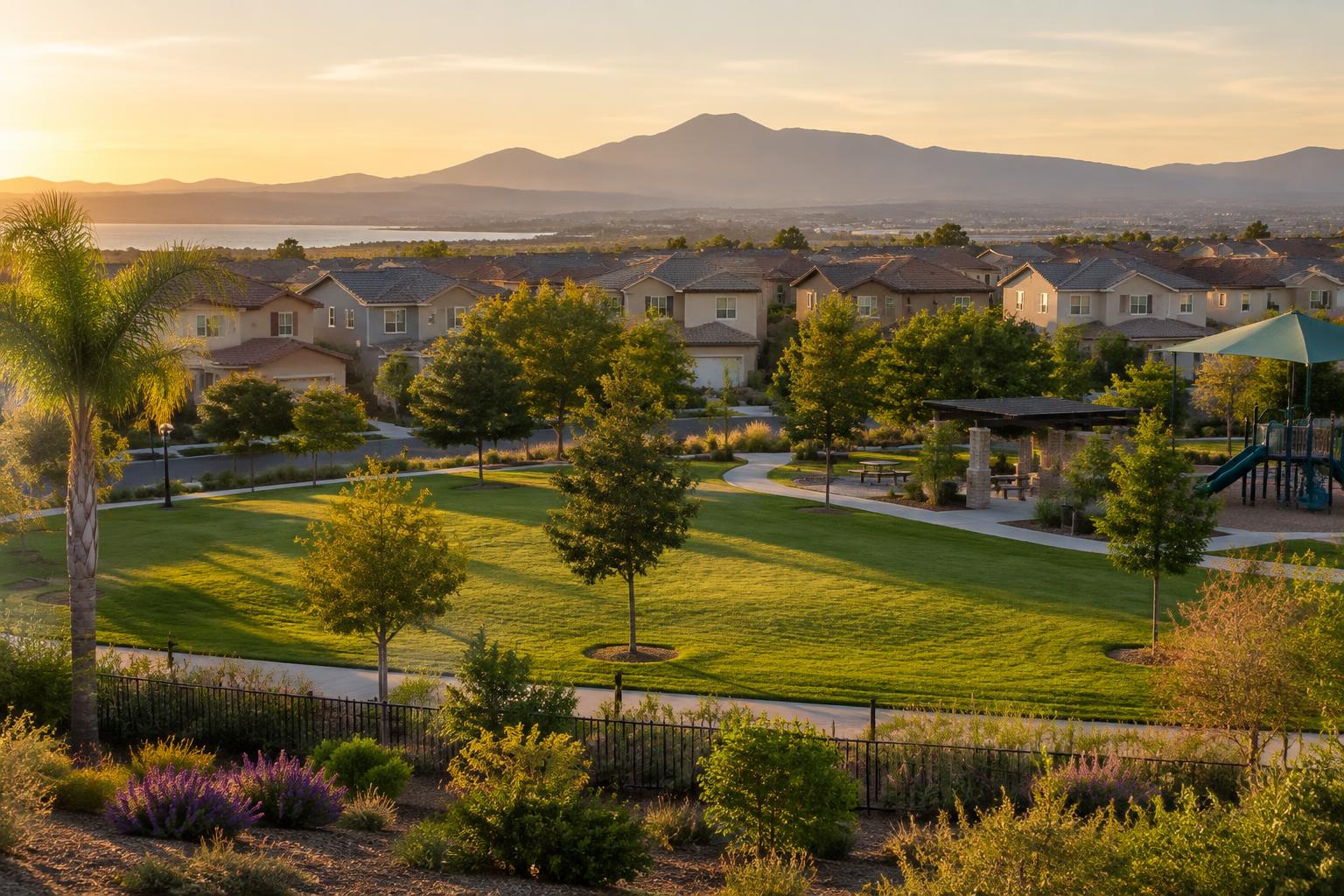
Chula Vista is one of the most geographically diverse communities in the San Diego region, stretching from San Diego Bay and a historic downtown east toward Otay Ranch, Eastlake, Otay Lakes, and the U.S.-Mexico border. The city contains everything from older ranch-style homes and established tree-lined neighborhoods to large master-planned communities, new construction, and ambitious future development. That variety is Chula Vista's biggest real estate advantage, and also its biggest challenge for buyers: there is no single Chula Vista lifestyle. The best way to understand the city is to understand which Chula Vista you're actually buying into.
A buyer living near Third Avenue can have a dramatically different experience from someone in Eastlake, Otay Ranch, or Millenia. West Chula Vista feels historic, established, and increasingly walkable, with mature trees, older homes, Trolley access, and a genuine local-business culture along Third Avenue. Central Chula Vista and Rancho del Rey offer an established suburban middle ground. East Chula Vista, from Eastlake through Rolling Hills Ranch, Otay Ranch, Millenia, and Escaya, is the newer, master-planned side of the city: newer homes, larger planned parks, modern shopping centers, and more controlled community design. Overlaying all of it is a genuine South Bay cultural identity shaped by proximity to the border, and two major future stories, the Chula Vista Bayfront and the University Innovation District, that could meaningfully change how the region thinks about the city over the next decade.
Live here if…
- You want meaningfully more house, newer construction, and more planned-community amenities for the money than most central or coastal San Diego markets.
- You're raising a family and want a strong combination of schools, parks, youth sports, and suburban space.
- You want the option to choose your own Chula Vista: historic Third Avenue character, an established suburban middle ground, or a newer master-planned community, all within one city.
- Your daily life is centered on the South Bay, National City, Coronado, Otay Mesa, or Chula Vista itself, or you have strong Trolley access needs in western Chula Vista.
- You're excited by long-term growth stories: the Chula Vista Bayfront's Gaylord Pacific Resort (already open) and the University Innovation District's early build-out.
Maybe not if…
- You want a short commute to North County, Sorrento Valley, UTC, or La Jolla; Chula Vista's distance from those areas is a real, recurring tradeoff.
- You want a beach-town lifestyle or dense, walkable urban neighborhood as your default daily experience across the whole city; that describes only pockets, not the citywide norm.
- You're evaluating a specific East Chula Vista property without checking for Mello-Roos or Community Facilities District (CFD) obligations, which can meaningfully change the real monthly carrying cost.
- You want a single, simple answer to 'what does a Chula Vista home cost'; the honest answer depends heavily on which of the city's very different housing markets you're asking about.
- You need to verify school assignment before you fall in love with a home; Chula Vista contains multiple school systems and school assignment is always address-specific.
Neighborhood DNA
How Chula Vista scores across the lifestyle factors that actually shape day-to-day life.
One of San Diego County's strongest family-oriented citywide markets, with more than 65 parks, extensive sports fields, and a youth-sports ecosystem including the Chula Vista Elite Athlete Training Center.
Highly address-specific and genuinely variable: Eastlake High School and Otay Ranch High School both rate 9/10 to 10/10 on GreatSchools, while Hilltop High School rates 6/10.
Highly variable citywide; West Chula Vista and Third Avenue are genuinely walkable, while most of East Chula Vista remains car-oriented despite Otay Ranch's more walkable village planning.
Genuinely bifurcated: Third Avenue offers the strongest small-business dining concentration in the South Bay, while East Chula Vista's dining is convenient but shopping-center and chain-oriented.
Concentrated almost entirely on Third Avenue (Dame Mas Cafeina Coffee Bar, Dark Horse Coffee Roasters, Grind House Chula Vista, Divina Matcha); minimal independent coffee culture in East Chula Vista.
More than 65 parks, over 85 sports fields, and more than 120 miles of bike paths and routes citywide, plus Otay Valley Regional Park and Otay Lakes, an underrated strength.
Limited primarily to Third Avenue's breweries and bars; not a nightlife destination citywide.
Genuinely strong at the local level (Third Avenue's business culture, master-planned community events) but fragmented citywide given how differently West and East Chula Vista feel.
Luxury homes are concentrated in select East Chula Vista communities rather than a citywide characteristic.
A genuinely strong value proposition relative to central and coastal San Diego, offering larger homes and newer construction without the coastal premium.
Two significant, partly already-realized transformation stories, the Chula Vista Bayfront (Gaylord Pacific Resort already open since May 2025) and the University Innovation District (Millenia Library, Phase 1, targeting fall 2026 SDSU programming), give this city genuine forward momentum beyond typical suburban appreciation.
Workable for South Bay, National City, Coronado, or Otay Mesa employment, but a genuine tradeoff for anyone commuting to North County, Sorrento Valley, UTC, or La Jolla.
Established, lower-cost housing options exist, though the citywide identity leans family- and youth-sports-oriented rather than retiree-focused.
More than 65 parks and 120+ miles of bike paths and routes support pet-owning residents, though specific off-leash infrastructure varies by area.
More than 65 parks and over 85 sports fields citywide, a genuine strength.
Otay Ranch Town Center is a genuine regional lifestyle destination; Chula Vista Center and Third Avenue serve the older central/western portion of the city.
Strong for South Bay, National City, Coronado, and Otay Mesa employment via I-5, I-805, SR-125, and the Blue Line Trolley in western Chula Vista, but a genuine and significant tradeoff for North County or Sorrento Valley/UTC/La Jolla commuters.
San Diego Bay access exists via the Bayfront, but Chula Vista is not a beach-town community.
A genuinely deep history: Kumeyaay village occupation, an 1880s land-boom founding by the San Diego Land and Town Company, the 1888 Sweetwater Dam, and a period as the largest lemon-growing center in the world by the 1920s, still visible today along historic Third Avenue.
A major, ongoing component of East Chula Vista, with Otay Ranch, Millenia, and Escaya all still in active build-out phases.
A genuinely wide range spanning mid-century and ranch-style West Chula Vista homes to contemporary master-planned East Chula Vista architecture, without one dominant citywide architectural identity.
The specific combination of a historic lemon-capital origin story, an Olympic and Paralympic training center, direct border-region cultural identity, and a currently-unfolding Bayfront resort and university-district transformation is genuinely distinctive among San Diego County cities.
Highly variable by area, from Third Avenue's dense, no-privacy urban corridor to Rolling Hills Ranch and San Miguel Ranch's more separated hillside lots.
The Market
Price range
$550K. $1.5M+
Trend
Citywide, essentially flat year over year per Redfin's May 2026 data ($800,625). Segment-level trends diverge meaningfully: Central Chula Vista +3.4% YoY, West Chula Vista +4.1% YoY, East Chula Vista -1.8% YoY, North Chula Vista +32.8% YoY (likely a small-sample swing), and Eastlake specifically -6.3% YoY.
Luxury segment
- • Select East Chula Vista communities including Eastlake Woods, Rolling Hills Ranch, and estate homes in Otay Ranch
HOAs & lots
Common in East Chula Vista's master-planned communities; many also carry Mello-Roos or Community Facilities District (CFD) obligations that fund infrastructure, landscaping, open space, trails, and community facilities. The real monthly carrying cost on many East Chula Vista homes should be evaluated as purchase price plus HOA plus Mello-Roos/CFD plus insurance plus property tax, not price and HOA alone.
Home Styles
Chula Vista's housing stock spans two overlapping real estate stories. Established Chula Vista (West and Central) offers older single-family homes, ranch-style houses, mature landscaping, larger lots, older condos, townhomes, and fixer opportunities. New Chula Vista (Eastlake, Rolling Hills Ranch, Otay Ranch, Millenia, Escaya, and San Miguel Ranch) offers new construction, master-planned neighborhoods, attached housing, modern single-family homes, condos, townhomes, new amenities, and planned open space. Across the city, buyers may also encounter mid-century homes, traditional two-story homes, luxury homes concentrated in select East Chula Vista communities, multifamily housing, and mixed-use residential product.
Schools
Local Favorites
Eats
A Los Angeles-based Mexican restaurant chain with roughly two dozen Southern California locations; the Chula Vista location on Third Avenue occupies a former Fuddruckers space.
Third Avenue pizza restaurant.
Coffee
A small San Diego-area coffee chain with 4 locations; the Third Avenue location is part of this regional group, not a national chain.
Breweries
A 2-location San Diego County brewery and pizza concept, with locations in Grantville and Chula Vista's Third Avenue corridor.
Saturday in Chula Vista
In West Chula Vista, a typical day might start with coffee on Third Avenue, a Blue Line Trolley ride toward downtown San Diego or south toward the border for work, and an evening back among older, tree-lined streets with a genuine local-business feel. In East Chula Vista, the rhythm looks different: a planned-community park or pool, a school run within a master-planned neighborhood, dinner at Otay Ranch Town Center or a neighborhood shopping center, and weekend recreation built around trails, lakes, and youth sports rather than the beach. Both are legitimately 'living in Chula Vista,' which is exactly why the city resists a single description.
Community Events
Getting around
Walkability: Highly variable: West Chula Vista and Third Avenue are genuinely walkable; most of East Chula Vista remains car-oriented despite Otay Ranch's more walkable village planning intent.
Biking: The City reports more than 120 miles of bike paths, lanes, and routes citywide, a genuine underrated strength alongside Otay Valley Regional Park's dedicated biking and equestrian trails.
Transit: MTS Blue Line Trolley (strongest in western Chula Vista) · I-5, I-805, and SR-125 freeway access
Drive times
- downtown
- 15 min
- utc
- 30 min
- nearest beach
- 20 min
Frequently Asked
Is Chula Vista a good place to buy a home?
For many buyers, yes, particularly families and buyers who want more house and newer construction for the money than central or coastal San Diego markets typically offer. But Chula Vista is genuinely diverse: the right answer depends heavily on which part of the city, West, Central, or East, fits your lifestyle and commute.
What is the median home price in Chula Vista?
Redfin reports a citywide median sale price of approximately $800,625 for May 2026, based on 416 sales, a reasonably large citywide figure. However, this single number obscures real differences: Central Chula Vista runs closer to $799,000, West Chula Vista around $755,000, East Chula Vista around $857,000, and Eastlake specifically around $569,000. Ask for data segmented by property type and specific community.
What's the difference between West, Central, and East Chula Vista?
West Chula Vista is the older, more established, more walkable side of the city, centered on downtown and Third Avenue. Central Chula Vista and Rancho del Rey offer an established suburban middle ground. East Chula Vista, including Eastlake, Rolling Hills Ranch, Otay Ranch, Millenia, and Escaya, is the newer, master-planned side of the city with more new construction, larger planned parks, and more controlled community design.
What school district serves Chula Vista?
Elementary education (TK-6) is primarily served by the Chula Vista Elementary School District, the largest elementary district in California with roughly 28,000 students across 50 schools. Middle and high school is primarily served by Sweetwater Union High School District (roughly 35,000 students across 29 schools). School assignment is always address-specific; verify the exact boundary for any property before purchasing.
Does any part of Chula Vista appear on San Diego's school-quality rankings?
Yes, one: Eastlake appears at #31 out of 40, graded B+/A-, described as one of South Bay's strongest educational communities. No other Chula Vista sub-area (West Chula Vista, Rancho del Rey, Rolling Hills Ranch, Otay Ranch, Millenia, or Escaya) appears on the list.
What is Mello-Roos and does it apply in Chula Vista?
Mello-Roos, formally a Community Facilities District (CFD), is a special tax that funds infrastructure, landscaping, open space, trails, and community facilities. The City maintains separate CFD districts for multiple Otay Ranch and East Chula Vista developments, including Eastlake and Rolling Hills Ranch. Don't compare two Chula Vista homes on purchase price and HOA alone; factor in Mello-Roos/CFD obligations, which can materially change the real monthly carrying cost.
What is the Chula Vista Bayfront and is it actually happening?
Yes, and it's further along than many buyers realize. The 535-acre Chula Vista Bayfront redevelopment includes the Gaylord Pacific Resort & Convention Center, which already opened on May 15, 2025, with 1,600 rooms, a 4.25-acre outdoor water park, 12 restaurants, and more than 477,000 square feet of event space, making it the largest hotel built on the West Coast. Roughly 230 acres, more than 40% of the project area, is dedicated to parks, open space, and habitat restoration.
What is the University Innovation District?
A multi-institutional, bi-national consortium project on nearly 400 acres of City-owned land in eastern Chula Vista, envisioned as an integrated university, research, business, and residential ecosystem that could eventually accommodate up to 20,000 students. Phase 1, the 168,000-square-foot Millenia Library, is the city's first new library since 1995 and is set to house SDSU School of Nursing and SDSU Global Campus programming beginning as early as fall 2026.
Is Chula Vista walkable?
Highly variable. West Chula Vista and the Third Avenue corridor are genuinely walkable, with more than 220 businesses concentrated along a single street. Most of East Chula Vista's master-planned communities are car-oriented, though Otay Ranch's original planning was explicitly designed to encourage walking and biking within its villages.
What is Chula Vista's history?
The area was long occupied by the Kumeyaay people before European settlement. The modern city emerged in the 1880s when the San Diego Land and Town Company began developing land south of National City; the name Chula Vista, meaning 'beautiful view,' was suggested by Dr. James D. Schuyler, the engineer who designed the 1888 Sweetwater Dam. That dam's irrigation helped Chula Vista become the largest lemon-growing center in the world by the 1920s, a history still connected today through historic Third Avenue.
Is Chula Vista good for families?
Yes, arguably one of its strongest buyer segments citywide. The city maintains more than 65 parks and over 85 sports fields, offers a genuine youth-sports ecosystem, and is home to the Chula Vista Elite Athlete Training Center, a 155-acre Olympic and Paralympic training site. Combined with generally larger, newer homes than central San Diego, this is a genuinely strong family market.
How does Chula Vista compare to San Diego overall?
San Diego generally wins on beach access, job proximity to coastal employment centers, and urban amenities. Chula Vista often wins on home size, newer construction, family amenities, planned communities, and relative value. For families who don't need to live near the coast, Chula Vista can be a genuinely compelling alternative.
What is the commute like from Chula Vista?
It depends heavily on where you work. Chula Vista offers excellent access to South Bay, National City, Coronado, and Otay Mesa employment via I-5, I-805, and SR-125, plus strong Blue Line Trolley access in western Chula Vista. Commuting daily to North County, Sorrento Valley, UTC, or La Jolla is a genuine and significant tradeoff.
Is Otay Ranch the same thing as one Chula Vista neighborhood?
No. Otay Ranch is an enormous master-planned development, not one neighborhood. Its original General Development Plan was approved in 1993 and its Otay Valley Parcel within Chula Vista covers approximately 9,449 acres across multiple villages and planning areas.
Is Chula Vista part of the City of San Diego?
No. Chula Vista is its own separately incorporated city in San Diego County, the second-largest city in the county, located in the South Bay between the City of San Diego and the U.S.-Mexico border.
Compare nearby
More urban, closer to Downtown San Diego, with older housing and a stronger industrial/working-city identity, versus Chula Vista's larger, more suburban and master-planned character.
Smaller, more semi-rural, more equestrian-influenced, and lower-density, versus Chula Vista's greater housing variety, shopping, and master-planned scale.
San Diego generally wins on beach access, job proximity, and coastal lifestyle; Chula Vista often wins on home size, newer housing, and relative value for families who don't need coastal proximity.
From the SD Love Blog
Should You Buy Now or Wait for Lower Rates in San Diego? Run the Numbers
Compare buying today vs. waiting for rates to drop, with a San Diego calculator for price growth, rent, and refinance cost.
San Diego Homes With Price Reductions: Where Buyers Actually Have Room to Negotiate
22% of San Diego listings have price cuts, but most homes still sell near asking. Here's how to tell an opportunity from a warning sign.
Is a VA Loan Still Worth It in San Diego With Rates Near 7%?
Higher rates change the payment, but not the VA loan's core advantages. Here is how zero down, funding fees, and entitlement work in San Diego.
Explore other communities
Thinking about Chula Vista?
Trying to figure out which Chula Vista actually fits how you want to live, historic Third Avenue, an established suburban middle ground, or a newer master-planned community out east? Reach out to The Real Estate Mama for a walk-through of the tradeoffs specific to your priorities and commute.
Or contact Celeste directly