Is University Heights a good place to live?
Yes, particularly for buyers who want a walkable, historic Uptown neighborhood with genuine community feel and a central location, without North Park's nightlife intensity or Downtown's density.
Why is it called University Heights if there's no university?
The name originated from an unrealized plan in the late 1880s to build a branch of USC in the neighborhood. The university was never built, but the name stuck.
How walkable is University Heights?
Highly walkable. A Walk Score in the high 80s to low 90s, among the most walkable neighborhoods.
What happened to the restaurants named as University Heights local favorites?
Parkhouse Eatery, Madison on Park, Mystic Mocha, Pop Pie Co., and Stella Jean's Ice Cream are located in University Heights. The Red Door is located in Mission Hills, and Pacific Pita's website lists only a Murrieta, CA location.
Is University Heights' dining scene mostly independent or corporate?
Of the local favorites, 3 are independently owned (Parkhouse Eatery, Madison on Park, Mystic Mocha), while 2 have grown into small multi-location San Diego chains (Pop Pie Co. and Stella Jean's Ice Cream, both now 6 plus locations including a Costa Mesa or Newport Beach outpost).
How good are the schools in University Heights?
Alice Birney Elementary, located directly in the neighborhood, rates a perfect 10/10 on GreatSchools and has been an authorized International Baccalaureate Primary Years Programme school since 2009-2010. Roosevelt International Middle School rates 5/10, and San Diego High School is described as performing average without an exact numeric score. Because the neighborhood participates in San Diego Unified's school choice program, buyers should verify specific school assignments and enrollment options before purchasing.
How much do homes cost in University Heights?
Figures diverge unusually sharply. A current median home value was roughly $877,000 (up 2.7% year over year, March 2026), a 12-month median sale price was $762,500 (down 21% from the prior period), and a more recent single-month figure cited a $1.1M median sale price (up 57.2% year over year). All are presented given the width of this divergence rather than resolved to one number.
What are the different areas of University Heights?
Park Boulevard District (the main dining and retail corridor), Adams Avenue Corridor (breweries, live music, and boutique retail blending into Normal Heights), Trolley Barn Area (historic Craftsman homes around Old Trolley Barn Park), North University Heights (quiet residential streets with canyon views), and Mission Valley Rim (scenic overlooks and larger homes).
What is Old Trolley Barn Park?
A park sitting on the site of San Diego's original streetcar barn, now the neighborhood's primary gathering place, hosting summer concerts and community events.
Is parking difficult in University Heights?
University Heights is highly walkable, but parking can be limited on some streets, a genuine trade-off buyers should weigh against the neighborhood's walkability and historic block layout.
How does University Heights compare to North Park, Hillcrest, Mission Hills, and Kensington?
North Park is larger, busier, and more nightlife-focused, while University Heights is quieter and more neighborhood-oriented. Hillcrest offers more density and entertainment, while University Heights provides a calmer atmosphere with similar walkability. Mission Hills features larger historic homes and a more upscale feel, while University Heights offers a younger demographic and more active local business scene. Kensington is quieter and centered around a single village neighborhood, while University Heights is more urban and walkable with a broader restaurant selection.
How far is University Heights from Balboa Park?
About 5 minutes by car, and easily walkable or bikeable for many residents, one of the shortest commutes to Balboa Park of any neighborhood.
What historic home styles will I find in University Heights?
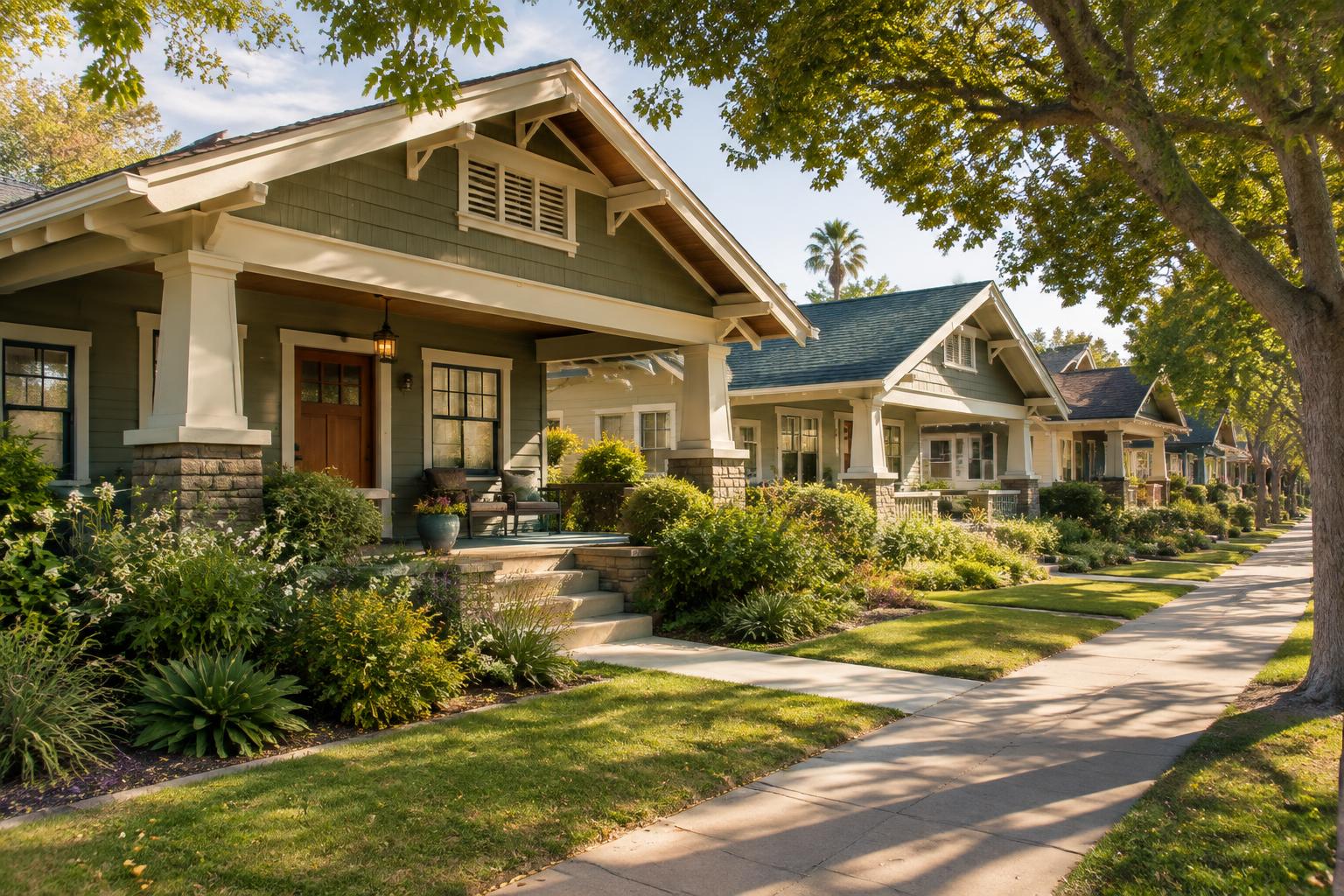
Historic Craftsman homes, Spanish Revival homes, California bungalows, duplexes, and small apartment buildings, most dating from the early 1900s through the 1940s.
Who typically moves to University Heights?
Young professionals, physicians, designers and architects, entrepreneurs, empty nesters, remote workers, historic home enthusiasts, and buyers relocating from larger urban markets.
What is the population of University Heights?
Population estimates vary by source and methodology, ranging from roughly 10,700 to 16,500 residents, with a median age of 36.
How much should I budget to buy in University Heights?
Values range from about $877,000 to $1.1 million depending on the measure. Duplexes and single-family homes vary a lot, so compare the same type. Email or call me and I'll pull the latest numbers for your street.
Are duplexes a good buy in University Heights?
They can be. Living in one unit and renting the other is a common way in. Check rents, condition, and permits.
What do University Heights buyers want most?
Character and walkability. Sellers should keep original features and show off the walk to Park Boulevard and Adams Avenue. Email or call me and I'll pull the latest numbers for your street.