
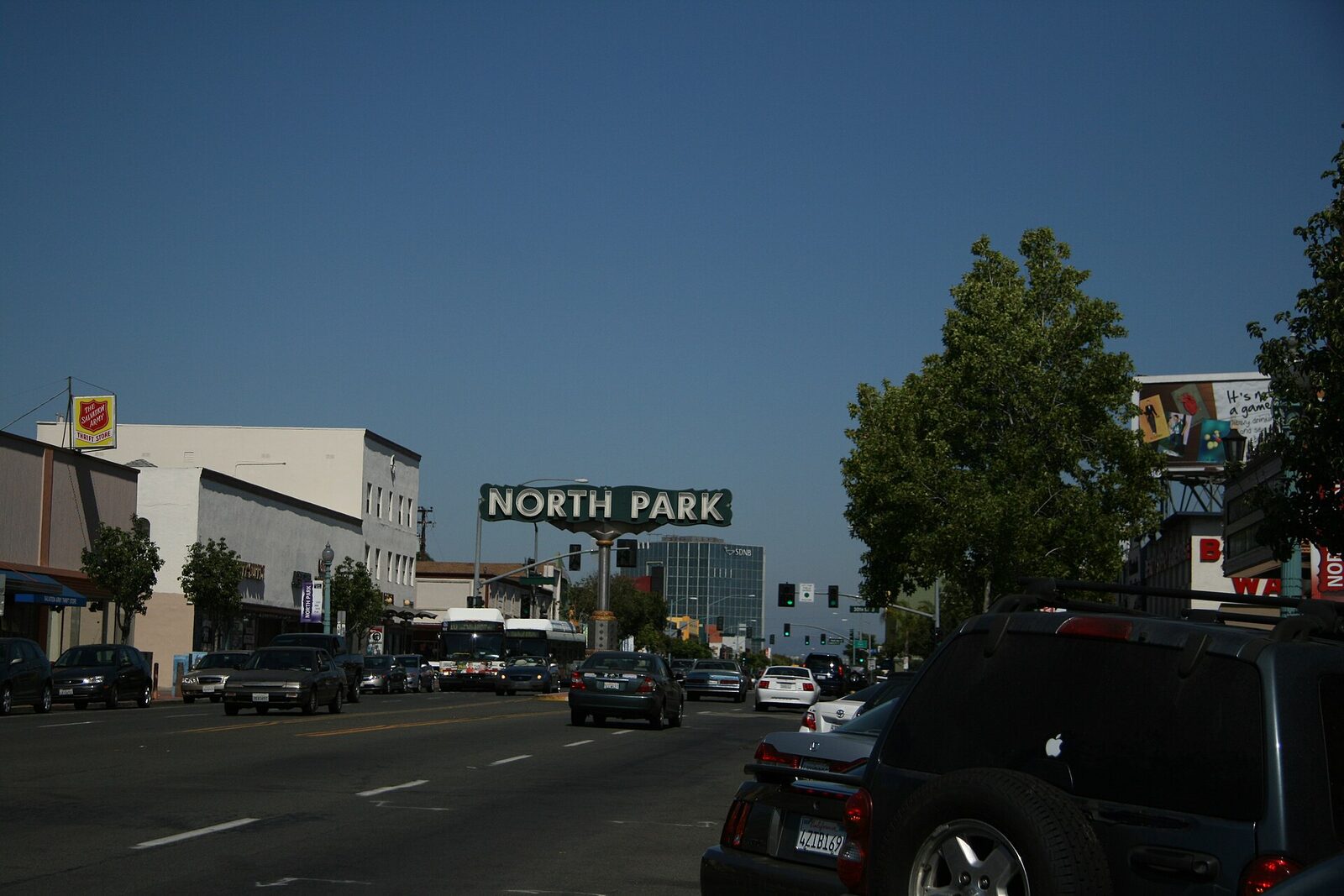
Central San Diego
Living in North Park: Which of the 5 Areas Feels Like You?
San Diego's craft beer capital and Craftsman-home archive, built for people who want a neighborhood they can actually walk to, not just visit.
The Vibe
North Park is one of San Diego's most walkable, most historically intact urban neighborhoods, and one that's easy to undersell if you're only listing landmarks, because its appeal isn't one attraction. It's the rhythm of everyday life: walking to a neighborhood coffee shop, grabbing Eats without getting in the car, spending an afternoon in Balboa Park, and living somewhere independent businesses genuinely outnumber national chains. Unlike some San Diego communities, North Park doesn't have sharply defined neighborhoods so much as five lifestyle areas that longtime residents navigate by feel: 30th Street & University District, Central North Park, Morley Field, Burlingame, and Altadena/North Edge.
North Park sits immediately northeast of Balboa Park, built originally as a streetcar suburb south of the University Avenue line that opened in 1907. Nearly one-third of its homes are Craftsman style, and more than half of the neighborhood's housing stock was built between 1921 and 1930, during a building boom that followed the arrival of the U.S. Navy and the 1915 Panama-California Exposition. That history is still visible on nearly every block.
30th Street & University District functions as the community's downtown, not a separate neighborhood so much as where residents gather for dining, coffee, shopping, fitness, and nightlife. North Park is locally branded "the epicenter of San Diego craft beer culture," with roughly 14 brewery locations packed into a 2.7-mile stretch of University Avenue, 30th Street, and El Cajon Boulevard, alongside The Observatory North Park, a 1929 movie palace originally built as the first West Coast theater for sound film and now a live-music venue, and the Ray Street Arts District, home to the long-running Ray at Night art walk. A few blocks off the commercial corridors, Central North Park turns noticeably quieter: mature trees, Craftsman and Spanish Revival homes, and a strong sense of community without losing walkable access to the restaurants and cafés everyone else visits.
Morley Field sits at North Park's edge, directly connected to Balboa Park's recreational core: 25 tennis courts, a well-regarded disc golf course, the Bud Kearns swimming pool, and miles of trails, all reachable on foot for the homes surrounding it. Burlingame, just south, is one of San Diego's most distinctive historic pockets: a 40-acre neighborhood platted in 1912, the only neighborhood in the city with rose-tinted sidewalks, and home to more than 170 architecturally significant homes spanning Craftsman, Spanish Colonial Revival, Prairie School, and Art Deco styles. And Altadena, anchored by Thorn Street and developed largely between 1907 and 1945, sits at North Park's edge toward University Heights, quieter, with slightly more architectural variety and a bit more breathing room than the commercial core.
Live here if…
- You want a genuinely walkable urban lifestyle: North Park carries a Walk Score of 86, San Diego's 14th most walkable neighborhood, with about 249 restaurants, bars, and coffee shops
- Historic architecture matters to you: nearly a third of North Park's homes are Craftsman style, and the Burlingame and Dryden historic districts protect some of San Diego's most architecturally significant residential blocks
- You want a fast, central commute: North Park sits about 3 miles from downtown, roughly 10-15 minutes in normal traffic
- Independent businesses and craft beer culture energize you: North Park is locally branded San Diego's craft beer capital, with roughly 14 breweries in a 2.7-mile corridor, alongside the Ray Street Arts District's galleries and monthly art walk
- You want direct access to Balboa Park's recreational core: Morley Field's tennis courts, disc golf course, pool, and trails are walkable from the surrounding streets
- You're comfortable in a renter-heavy, density-forward urban environment rather than a quiet suburban one: North Park is roughly 71% renter-occupied, among San Diego's most renter-heavy neighborhoods
Maybe not if…
- You need one uniform neighborhood: North Park doesn't have sharply defined sub-neighborhoods, and housing character can vary significantly from block to block
- You want a quiet, low-density community: 30th Street & University District is dense, renter-heavy, and busy most evenings; Burlingame and Altadena offer more quiet, but the core does not
- Street parking near the commercial corridors is a dealbreaker: parking becomes competitive in the most popular areas, especially near 30th Street and University Avenue
- Ocean or bay access is a priority: North Park is inland, several miles from the nearest beach.
- North Park schools do not currently rate among the top San Diego schools, though Jefferson Elementary's IB/STEAM magnet program draws interest from local families.
Neighborhood DNA
How North Park scores across the lifestyle factors that actually shape day-to-day life.
Morley Field, Burlingame, and Altadena/North Edge all support genuine family life, though the 30th Street/University core skews toward young professionals and renters. North Park overall is attracting a growing number of families thanks to its central location and park access.
Jefferson Elementary is an IB/STEAM magnet drawing real local interest.
Walk Score of 86, San Diego's 14th most walkable neighborhood, with about 249 restaurants, bars, and coffee shops and residents able to walk to an average of 8 in five minutes.
One of San Diego's most recognized independent dining scenes, concentrated along University Avenue, 30th Street, and El Cajon Boulevard.
Communal Coffee (independently owned since 2016, a recurring Neighborhood Favorite 2017-2024) anchors a genuine independent coffee-shop culture alongside numerous other cafes along the commercial corridors.
Morley Field's 25 tennis courts, disc golf course, pool, and sports fields, plus direct Balboa Park trail access, give North Park a genuine recreational identity despite being inland.
Locally branded "the epicenter of San Diego craft beer culture," with roughly 14 breweries in a 2.7-mile corridor plus The Observatory North Park for live music.
The Ray Street Arts District's monthly Ray at Night art walk (running since 2001), a strong independent-business identity, and active historic-preservation groups (North Park Historical Society, Burlingame Neighborhood Association) point to genuine, sustained civic infrastructure.
Burlingame's protected historic homes on larger lots give North Park a real upper tier, but nothing approaching La Jolla or Point Loma's ultra-luxury ceiling.
A $880,000 to $940,000 median offers real relative value against San Diego's coastal neighborhoods, even as prices have risen with the craft-beer and walkability boom.
A seller's market with roughly 2.0 months of inventory for single-family homes and 1.7 months for condos, homes selling at or above 100% of list price on average, and durable rental demand given the neighborhood's renter-heavy composition.
Dense walkability, craft beer and dining culture, and a condo/apartment-heavy housing stock make this one of the strongest young-professional fits.
A younger-skewing, renter-heavy community overall; some long-term homeowners exist in Burlingame and Central North Park, but North Park is not a retiree-dominant market.
Morley Field's trails and open space, plus Balboa Park's broader network, give North Park genuine dog-walking infrastructure despite its urban density.
Direct access to Balboa Park (one of the largest urban parks in the country) via Morley Field's sports complex, plus the smaller North Park Mini Park behind The Observatory.
University Avenue and 30th Street give North Park a real, walkable boutique-shopping identity, concentrated rather than community-wide.
About 3 miles and 10 to 15 minutes to downtown in normal traffic (20 to 30 minutes at rush hour), one of the most central commute profiles.
North Park is inland, several miles from the nearest beach, with no direct water access.
The Burlingame Historic District (platted 1912, 170+ significant homes, the city's only rose-tinted sidewalks), the Dryden Historic District's David Owen Dryden bungalows (1915-18), and The Observatory North Park (built 1929 as the first West Coast sound-film theater) give North Park exceptional documented historic depth.
Mixed-use and infill development along the commercial corridors represents real but moderate new-construction activity relative to the neighborhood's overwhelmingly early-20th-century housing stock.
Nearly one-third of homes are Craftsman style, with Spanish Revival, Mission Revival, Prairie School, and Art Deco homes also well represented, one of San Diego's most architecturally diverse and intact urban housing stocks.
The specific combination of a nationally recognized craft beer scene, a protected historic bungalow neighborhood with the city's only rose sidewalks, and a converted 1929 sound-film theater isn't replicated elsewhere.
A dense, walkable urban environment overall. Burlingame and Altadena/North Edge offer more, but community-wide this is a public-facing, foot-traffic-heavy neighborhood, especially near the 30th Street/University corridor.
The Market
Price range
Trend
Median sale prices vary month to month: $941,500 in February 2026 versus $880,000 in March 2026 (down 11.2% year-over-year). North Park's relatively low monthly transaction count means prices can fluctuate.
Luxury segment
- • Burlingame Historic District custom and landmark homes
- • Larger historic residences near Morley Field
HOAs & lots
Common in condo and townhome developments along the 30th Street corridor and near Morley Field; rare among single-family homes in Central North Park, Burlingame, and Altadena/North Edge.
Home Styles
North Park offers one of the most architecturally diverse housing inventories in urban San Diego. Craftsman bungalows dominate Central North Park and much of the Dryden Historic District (a concentration of sixteen bungalows built 1915-18 by master builder David Owen Dryden). Burlingame layers Craftsman alongside Spanish Colonial Revival, Mission Revival, Prairie School, and Art Deco homes across its 40-acre, rose-sidewalk historic district. Morley Field's streets mix Craftsman homes and larger historic residences with condominiums and townhomes closer to Balboa Park. The 30th Street & University District corridor is North Park's densest housing type: condominiums, apartments, and newer mixed-use buildings alongside historic cottages and smaller single-family homes. Altadena/North Edge, developed largely 1907-1945, adds detached homes, townhomes, and additional historic residences as the neighborhood transitions toward University Heights.
Schools
Local Favorites
coffee
Open since 2016 at 2335 University Ave; combines a café with an adjoining flower shop. A recurring local Neighborhood Favorite from 2017 through 2024.
eats
A San Diego brunch and Eats staple for over 20 years, known for house-baked bread and pastries.
nightlife
A live-music venue in the restored 1929 North Park Theatre building, the first West Coast theater built for sound film; also home to West Coast Tavern.
Modern Times' North Park tasting room on 30th Street, offering 20 taps; part of a multi-location San Diego brewery.
A locally owned brewery anchoring North Park's craft beer identity.
shopping
Art galleries and studios centered on Ray Street between University Avenue and North Park Way; hosts the monthly Ray at Night art walk since 2001.
parks
25 tennis courts, a 19-hole disc golf course, the Bud Kearns swimming pool, sports fields, a velodrome, and native trails within Balboa Park.
Saturday in North Park
Weekdays start with a walk to a neighborhood café, work from home or a commute downtown that rarely takes more than 15 minutes, Eats with friends on 30th Street, and an evening stroll through tree-lined residential streets. Weekends shift toward the North Park Thursday Market's weekday counterpart or a Saturday spent browsing Ray Street's galleries and boutiques, an afternoon at Morley Field or deeper into Balboa Park, brunch at a neighborhood spot, and a show at The Observatory North Park or Eats at one of the area's many independent restaurants. North Park is built around this kind of neighborhood living rather than a single destination attraction. The same rhythm repeats, just with a different brewery or restaurant each time.
Community Events
Getting around
Walkability: Community-wide Walk Score of 86 ("very walkable"), San Diego's 14th most walkable neighborhood. Highest along the 30th Street/University Avenue corridor, quieter in Burlingame and Altadena/North Edge.
Biking: A largely flat to gently rolling street grid supports daily biking along the commercial corridors.
Transit: MTS Route 7 bus connects North Park to downtown San Diego along University Avenue/Park Boulevard, roughly every 20 minutes
Drive times
- downtown
- 12 min
- nearest beach
- 20 min
Frequently Asked
Is North Park a good place to live?
Yes, for buyers who want a genuinely walkable urban lifestyle with historic character. North Park carries a Walk Score of 86 (San Diego's 14th most walkable neighborhood) and sits about 3 miles/10-15 minutes from downtown. Which of the five lifestyle areas fits depends on how much quiet versus energy you want.
What are the different areas within North Park?
Five commonly-recognized lifestyle areas: 30th Street & University District, Central North Park, Morley Field, Burlingame, and Altadena/North Edge.
Is North Park good for families?
Parts of it, yes: particularly Morley Field (direct Balboa Park recreation access) and Burlingame or Altadena/North Edge (quieter, more residential streets). The 30th Street & University District skews younger and more transient.
What schools does North Park feed into?
Jefferson Elementary (an IB/STEAM magnet) and McKinley Elementary are the two most commonly asked-about elementary schools, though attendance boundaries don't always match informal neighborhood lines.
How much do homes cost in North Park?
The median sale price has run $880K-$940K in recent months (source and month dependent), with price per square foot around $753. Condos along the 30th Street corridor start lower; Burlingame's historic homes run considerably higher.
Which part of North Park is the most affordable?
The 30th Street & University District generally offers the most accessible entry point, dominated by condos and apartments.
Is North Park walkable?
Yes. A community-wide Walk Score of 86 makes it San Diego's 14th most walkable neighborhood, with about 249 restaurants, bars, and coffee shops. Walkability is highest along the 30th Street/University corridor and lower in Burlingame and Altadena/North Edge.
How far is North Park from downtown San Diego?
About 3 miles, roughly 10-15 minutes by car in normal traffic (20-30 minutes at rush hour).
Why is North Park called San Diego's craft beer capital?
Roughly 14 brewery locations are packed into a 2.7-mile corridor along University Avenue, 30th Street, and El Cajon Boulevard, including Modern Times Flavordome, North Park Beer Company, and Original 40 Brewing.
What is The Observatory North Park?
A live-music venue inside the restored 1929 North Park Theatre, originally the first West Coast theater built specifically for sound film, now also home to West Coast Tavern.
What is the Burlingame Historic District?
A 40-acre residential neighborhood platted in 1912, protecting more than 170 architecturally significant homes across Craftsman, Spanish Colonial Revival, Mission Revival, Prairie School, and Art Deco styles. It's the only neighborhood in San Diego with rose-tinted sidewalks.
Does North Park have beach access?
No. North Park is inland, several miles from the nearest beach. Buyers prioritizing ocean access should consider a coastal neighborhood instead; North Park's appeal is its walkable urban lifestyle and Balboa Park proximity.
What's the best area in North Park for recreation?
Morley Field, which borders Balboa Park directly and offers 25 tennis courts, a disc golf course, a public pool, sports fields, and trail access on foot.
Is North Park a renter-heavy or owner-heavy market?
Renter-heavy: roughly 71% of North Park's housing is renter-occupied, among the highest shares of any neighborhood, reflecting its dense, walkable, apartment and condo rich housing stock.
What's the difference between North Park and South Park?
North Park offers more dining, nightlife, and housing inventory; South Park has a quieter, more residential feel with a village atmosphere.
How competitive is North Park for buyers?
Busy. This guide shows about 33 days on market, and well-kept Craftsman homes can get multiple offers. Email, call, or DM me on Instagram and I'll pull the latest numbers for your street.
What should I check when buying an older North Park home?
Many homes date from the 1920s. Look at electrical, plumbing, foundation, and sewer lines closely.
What helps a North Park home sell?
Buyers want original character plus updated systems. Highlight both, and clear up any unpermitted work before listing. Email, call, or DM me on Instagram and I'll pull the latest numbers for your street.
Compare nearby
North Park offers more dining, nightlife, and housing inventory, while South Park has a quieter, more residential feel with a village atmosphere.
Hillcrest is denser and more urban, with stronger ties to the medical district and Balboa Park; North Park generally offers more single-family homes and a broader mix of historic architecture.
University Heights is quieter and more residential; North Park has a larger restaurant scene, more shopping, and a more active nightlife.
North Park offers an urban, walkable lifestyle centered on restaurants, coffee, arts, and community; Pacific Beach focuses on coastal living, beaches, surfing, and waterfront recreation.
Mission Hills tends to feature larger homes, more traditional residential streets, and a quieter atmosphere; North Park provides greater walkability, nightlife, and a wider range of locally owned businesses.
From the SD Love Blog
Balboa Park December Nights 2026: Dates, Parking, and a Plan for Going With Kids
December Nights returns Dec. 4 and 5 with free admission. Here is a practical family plan, plus what to verify before you go.
San Diego Farmers Markets by Day of the Week
A current day-by-day guide to San Diego farmers markets, with hours, locations and recent market moves.
Adams Avenue Street Fair 2026: A Family Guide to Normal Heights' Free Festival
The Adams Avenue Street Fair returns Sept 19-20, 2026. Free entry, six stages, carnival rides. Here's how to do it with kids in tow.
Explore other communities
Thinking about North Park?
The most useful thing I can do for you in North Park isn't showing you listings. It's helping you figure out which of the five lifestyle areas actually matches how you live. Walkable, dense 30th Street & University, quieter historic Central North Park, recreation-anchored Morley Field, architecturally protected Burlingame, or slightly more spacious Altadena/North Edge are genuinely different decisions on noise, walkability, price, and historic character. Reach out anytime and I'll walk you through which one is actually your North Park.
Or contact Celeste directly